Scarthin Books - Cromford
Scarthin Books - Cromford
Overlooking Cromford’s mill pond, Scarthin Books occupies an old industrial building where literature, engineered water systems and valley life continue to coexist naturally.
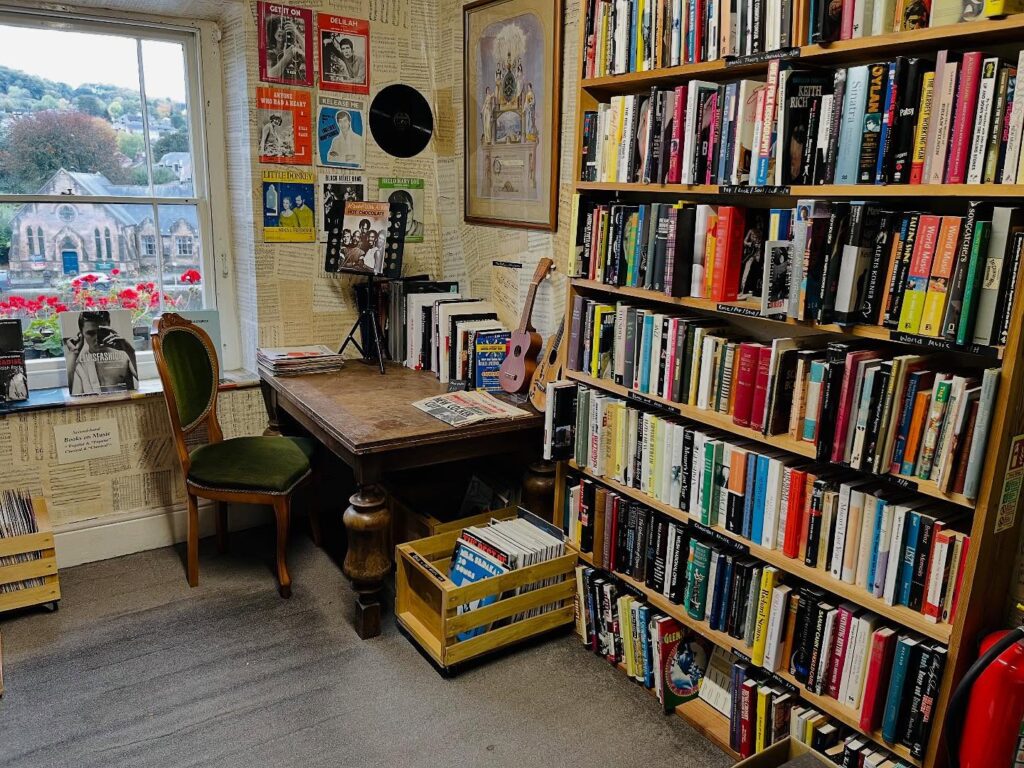
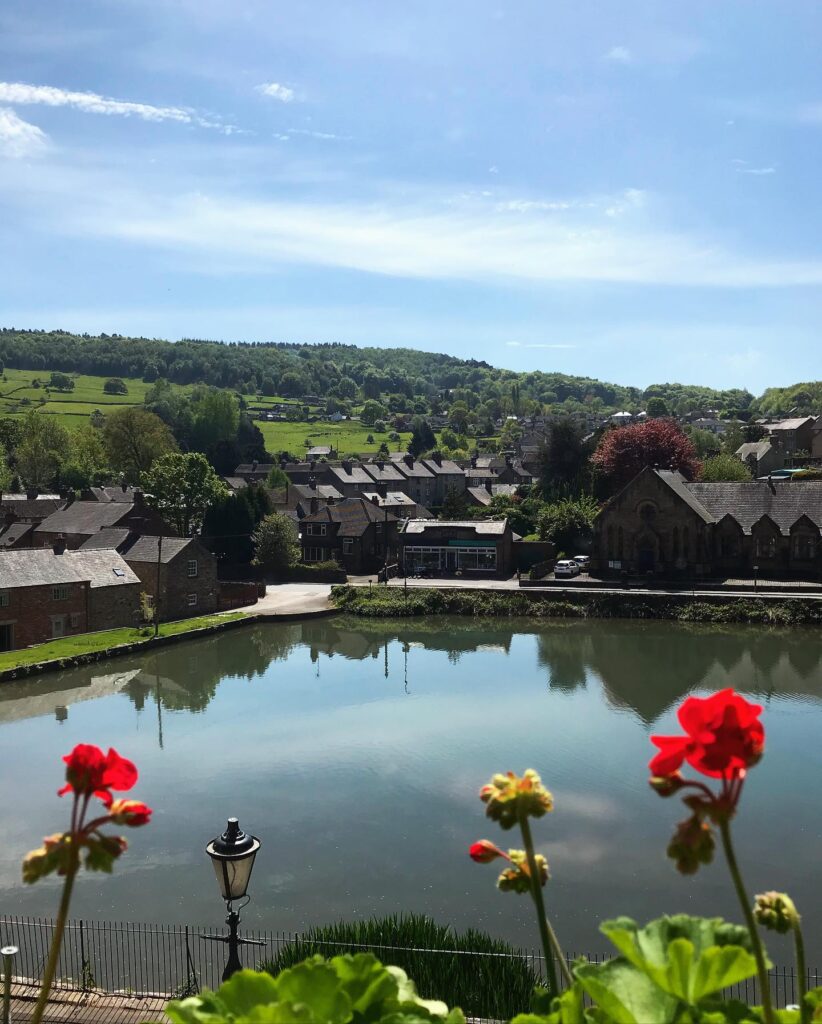
The long stone buildings around Cromford were raised originally for movement rather than contemplation, their windows aligned to light workshops and storehouses beside the cold, controlled waters that fed the mills, and it is difficult to stand inside Scarthin Books on an early summer afternoon, with clouds moving quickly over the surface of the mill pond below, without sensing how completely the valley still operates according to arrangements laid down during the first industrial age, when water, labour and transport had to function together with practical precision if anything here was to survive at all. The bookshop occupies one of those old stone structures that once belonged naturally to the wider industrial organism of the village, overlooking the watercourses and retaining walls that supported Cromford Mill, and although the building now contains shelves instead of machinery, and cafés instead of clerks or overlookers, the sense of layered use remains embedded in the floors, staircases and oddly angled rooms that seem less designed than accumulated over time.
What strikes you first inside Scarthin Books is not scale but depth, because the place unfolds gradually through narrow passages and stairways in a manner that resembles an old service network more than a modern retail space, the rooms opening unexpectedly into one another like chambers inside a retaining wall or cavities beneath a quarry face, while the smell of old paper and timber gathers heavily in the warmer corners where sunlight reaches through imperfect panes. Somewhere deeper inside, beyond the shelves of local history, travel writing and railway memoirs, the little café appears almost by surprise, occupying a series of compact rooms whose low ceilings and mismatched tables give the impression that they have simply evolved into existence over many decades rather than having ever been formally planned. Tea arrives in heavy cups, cakes lean slightly beneath glass covers, and conversations drift quietly between walkers, readers and local residents sheltering from the passing weather outside, while the windows frame the mill pond below where waterfowl now move slowly through channels once maintained with industrial exactness. The effect is cocooning rather than theatrical, and perhaps this feeling emerges partly because the building still carries the enclosed practical logic of industrial Cromford itself, where workers, stores, canals, ponds and workshops once had to fit tightly into a confined limestone valley whose geology allowed neither waste nor spaciousness.
Although visitors arrive now in walking boots, carrying guidebooks and takeaway coffees rather than ledgers or tools, the human continuity of the place feels unusually intact, because Cromford has never entirely detached itself from the practical rhythms that created it in the first place, and the café inside the bookshop reflects this better than any formal heritage display could manage. People sit among stacked volumes discussing local walks, rainfall, trains, allotments and second-hand finds while cyclists drift in from the canal paths and older residents appear to know instinctively which room contains obscure Derbyshire histories or forgotten mining accounts, and in this way the building continues quietly to function as a meeting point within the valley rather than simply an attraction placed upon it. Even the slight inconvenience of parking, with vehicles squeezed awkwardly into surviving industrial spaces never intended for modern traffic volumes, reinforces the sense that contemporary life here has had to negotiate carefully with older physical realities rather than erase them.
Beyond the immediate warmth of the shop itself lies the larger presence of Cromford’s industrial system, because the mill pond below was never decorative water but part of an engineered hydraulic arrangement designed to maintain consistent power for Arkwright’s mills, whose success depended upon controlling water flow with extraordinary discipline in a landscape where rainfall, limestone geology and narrow transport corridors dictated almost every practical decision. The valley became one of the prototypes of industrial organisation in Britain, connected eventually by canal, road and railway to wider manufacturing networks, and although the noise of machinery has long since disappeared, traces of those systems remain visible everywhere in stone embankments, culverts, terraces and water channels that still determine movement through the village today. What Scarthin Books achieves so successfully is not escape from that history but habitation within it, allowing the older structure of the place to remain legible while adapting it into something humane, curious and sustaining rather than merely preservational.
As the afternoon light shifts across the pond and the clouds continue moving low over the Derbyshire hills, there is a lingering sense that places such as this survive not because they resist change entirely, but because they absorb new forms of use without losing the memory of earlier purpose, and sitting among crowded shelves with coffee cooling slowly beside the window above the old industrial waters of Cromford, one becomes aware that continuity often survives less through monuments than through ordinary acts of occupation carried forward carefully inside old walls.
Contact
The Promenade,
Cromford
DE4 3QF
- 01629 823272
- nickscarthin@gmail.com
- http://www.scarthinbooks.com/
Reasons To Visit
Perhaps the best little bookshops in the world – surrounded by some splendid history and a cracking café hidden away inside.
Close By - Worth Your Time
Cromford Canal
A slow stroll around Cromford
Best Local Cafe
Scarthin Books Café
Best Local Pub
The Boat - Cromford
Local Accommodation
Weaver’s Cottage