Ye Olde Butchers Arms - Reapsmoor
Ye Olde Butchers Arms - Reapsmoor
Ye Olde Butchers Arms at Reapsmoor remains shaped by old packhorse routes, moorland weather and a slower rural continuity rarely preserved elsewhere.
The road across Reapsmoor still carries the logic of older movement, because even now, with modern traffic reduced to the occasional van, farm pickup or walker’s car easing onto the verge, the route retains the stretched, exposed feeling of a high country crossing where weather, trade and distance once governed daily life far more heavily than comfort ever did, and it is here, standing beside Ye Olde Butchers Arms on a cold early summer afternoon with sunlight moving hard across the stone walls and the moorland grass already carrying the dull silver-green tones of wind exposure, that the place begins to feel less like a surviving pub than a small interruption in time itself.
Ye Olde Butchers Arms exists where it does because routes once mattered physically, and the old packhorse roads threading through this section of the Staffordshire Moorlands linked isolated farms, quarries, market settlements and upland communities long before modern transport flattened distance into convenience, while the geography around Reapsmoor, with its difficult weather, exposed ridges and poor agricultural ground, created settlements built more around movement, labour and survival than around expansion, leaving behind inns whose purpose was practical first and social second, places where drovers, quarrymen, labourers and travellers could warm themselves beside a fire before crossing the next stretch of exposed country. Much of that older structure remains visible if one looks carefully enough, because the road still bends according to the land rather than modern engineering logic, the stone boundary walls continue to hold fields wrestled from thin upland soil, and the pub itself retains the slightly uncertain appearance of somewhere existing outside commercial time, as though regular opening hours and polished presentation belong to another world entirely.
Inside, the atmosphere carries a strange continuity which increasingly disappears elsewhere, not through deliberate nostalgia or curated heritage aesthetics, but because so little appears to have been adjusted to modern expectations, and the ashtrays resting on the tables, the quietness between conversations, the basic bagged snacks behind the bar and the absence of any attempt to reinvent the building into a destination venue combine to create the impression that one has stepped backwards perhaps thirty years into a version of rural England which large parts of the country have already paved over, renovated or priced beyond recognition. Even the practical advice passed quietly between visitors, that the place may appear closed but one should simply try the door and ask for Syd, feels connected to an older rural pattern in which places functioned through local understanding rather than signage, branding or online certainty. Stories also accumulate here in the same practical manner, passed between drinkers without ceremony, including the often-repeated account of the then Prince Charles stopping here while out hunting across the surrounding moors, only for the landlord of the day to call cheerfully after him as he departed, “Give my regards to your mother,” a line which survives partly because it captures something essential about these upland pubs, where social rank tends to soften beneath weather, distance and familiarity.
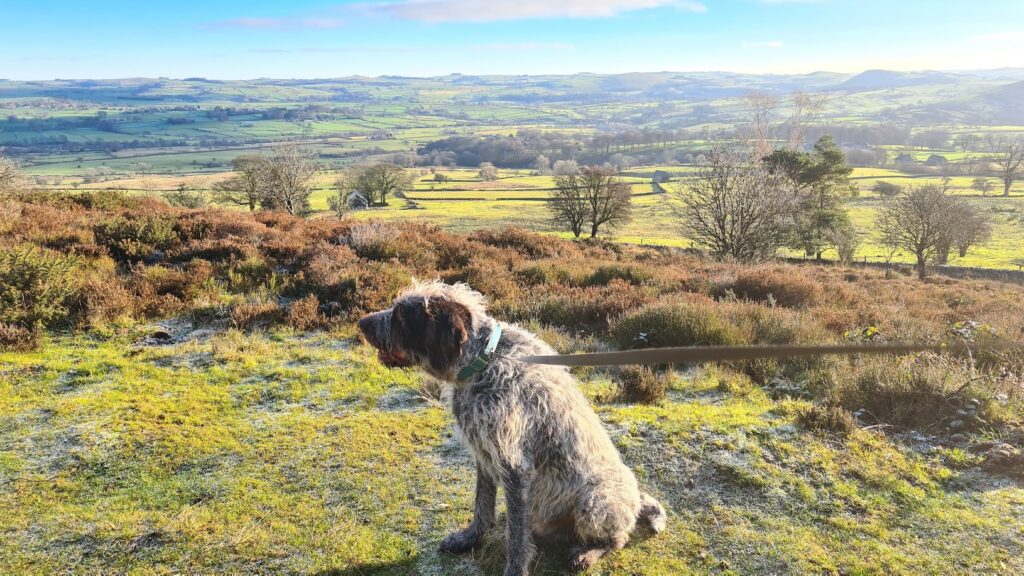
Beyond the walls of the inn the landscape continues its slower work, because the moorland edges around Reapsmoor are shaped as much by weather and water as by human effort, and although the old industrial intensity of the wider Staffordshire uplands has largely faded from direct sight, traces of quarrying, extraction and hard agricultural labour remain embedded in the physical arrangement of the land itself, while the hedgerows, rough grasses and wind-bent trees have gradually reclaimed ground once maintained through constant necessity. Walkers heading out toward the Revenge route move through this layered terrain often without fully noticing how old transport logic still shapes their paths, because many of these walking routes follow lines established centuries earlier through repeated use by people moving goods, animals and materials across country where easier alternatives simply did not exist.
What gives Ye Olde Butchers Arms its peculiar weight is not rarity alone, but continuity, because the building still functions according to the practical social role that created it in the first place, offering shelter, warmth, conversation and pause within a landscape that remains physically demanding despite modern roads and heated cars, and there is something quietly reassuring in finding that not every old upland inn has yet been transformed into a carefully managed performance of rural life. The place remains slightly rough around the edges, slightly uncertain, slightly resistant to polish, yet perhaps because of that resistance it carries an atmosphere increasingly difficult to reproduce artificially, where labour, weather, habit and local memory still seem faintly visible within the walls themselves.
As the afternoon light begins lowering across the high ground around Reapsmoor, catching the stonework in sharp pale colour while cold air starts drifting back down from the open moor, the pub settles again into the landscape that produced it, neither preserved as museum piece nor fully absorbed into modern tourism, but continuing quietly in the space between disappearance and survival where so much of rural Britain now seems to exist.
Contact
Reapsmoor
SK17 0LL
- 07772 326518
Reasons To Visit
Absolutley unique – very few pubs left like this – a remote Staffordshire Moorlands pub shaped by packhorse routes, weather and rural continuity.
On Tap
Reapsmoor IPA
Carling Lager
On the Menu
Scampi Fries
Pork Scratchings
Close By - Worth Your Time
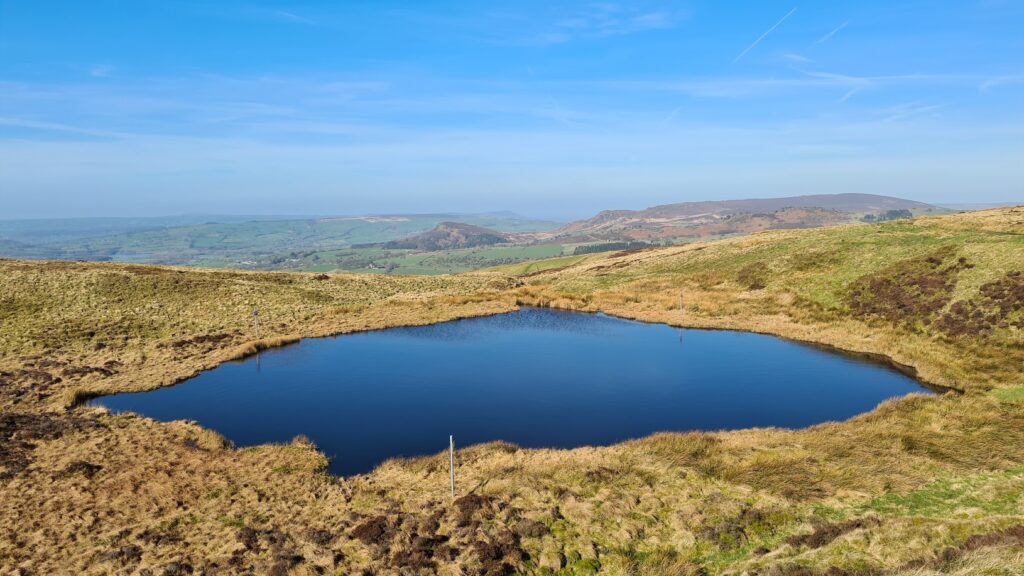
Blake Mere Mermaid Pool
Revidge
Local Accommodation
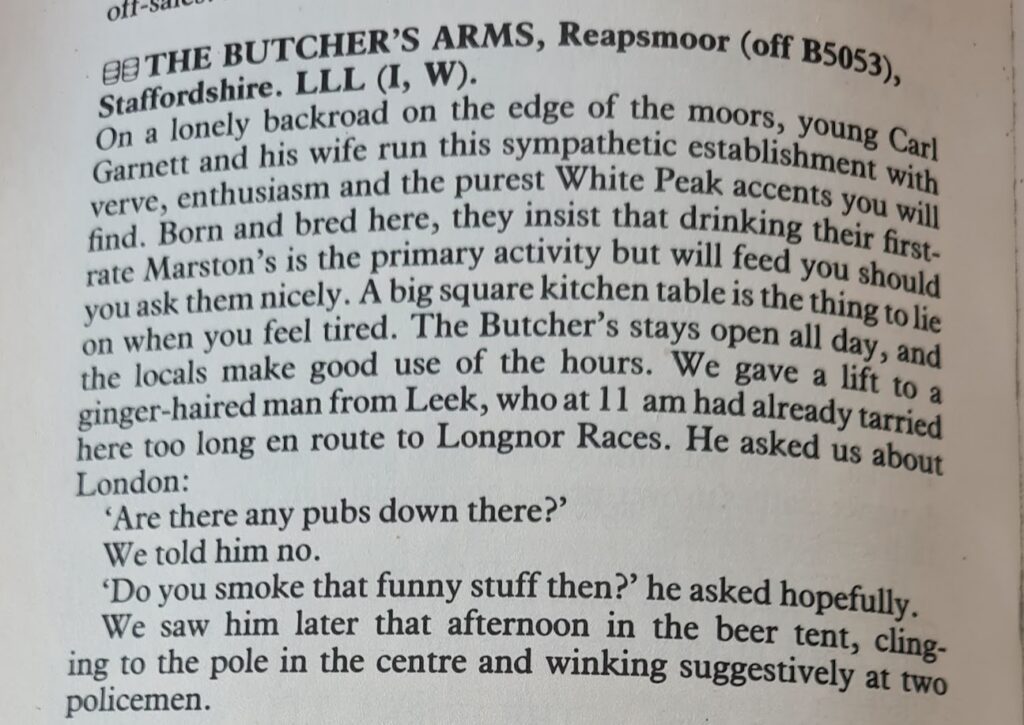
The Quest for The Perfect Pub - Nick & Charlie Hurt - 1989