Ecton Copper Mines
Ecton Copper Mines
Ecton Copper Mines - explore steep limestone hillsides, old mine shafts, spoil heaps and a network of paths to reveal one of Britain’s long mining landscapes today.
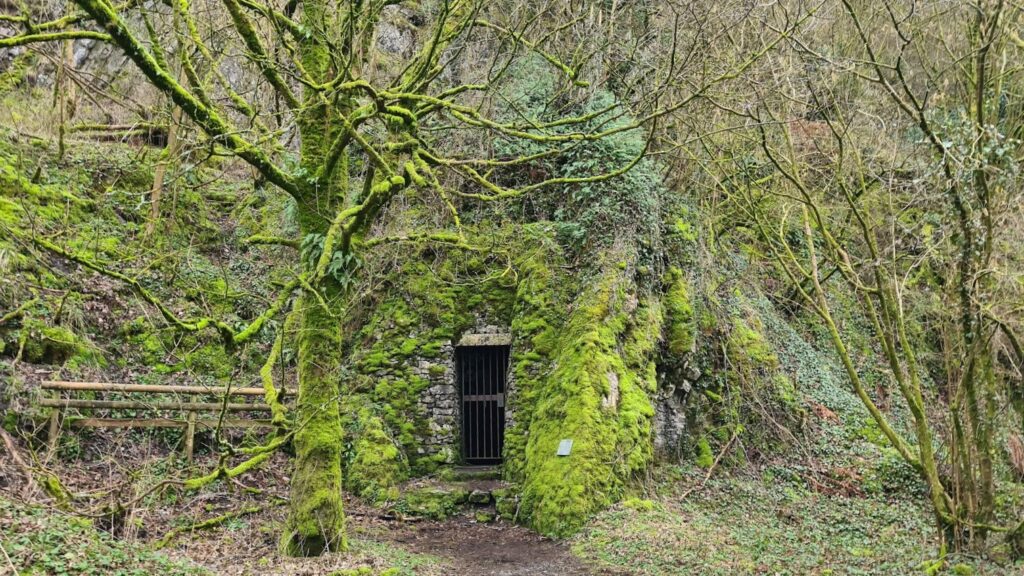
Ecton Copper Mines sits on a steep limestone hill above the road near Ecton, where the entrance into the hill has the plain, unsettling authority of a door into the underworld, and where the shape of the ground still tells you that this was never merely scenery, but a working landscape made by geology, labour, water, ore and time. In early summer sunshine the hill rises cleanly from the valley, carrying grass, spoil and stone with a kind of quiet firmness, yet beneath that calm surface lies one of the longest industrial stories in the Peak District, for copper and lead were worked here from Bronze Age times and continued, with long interruptions and changing methods, for more than 3,500 years until mining finally ceased in 1891.
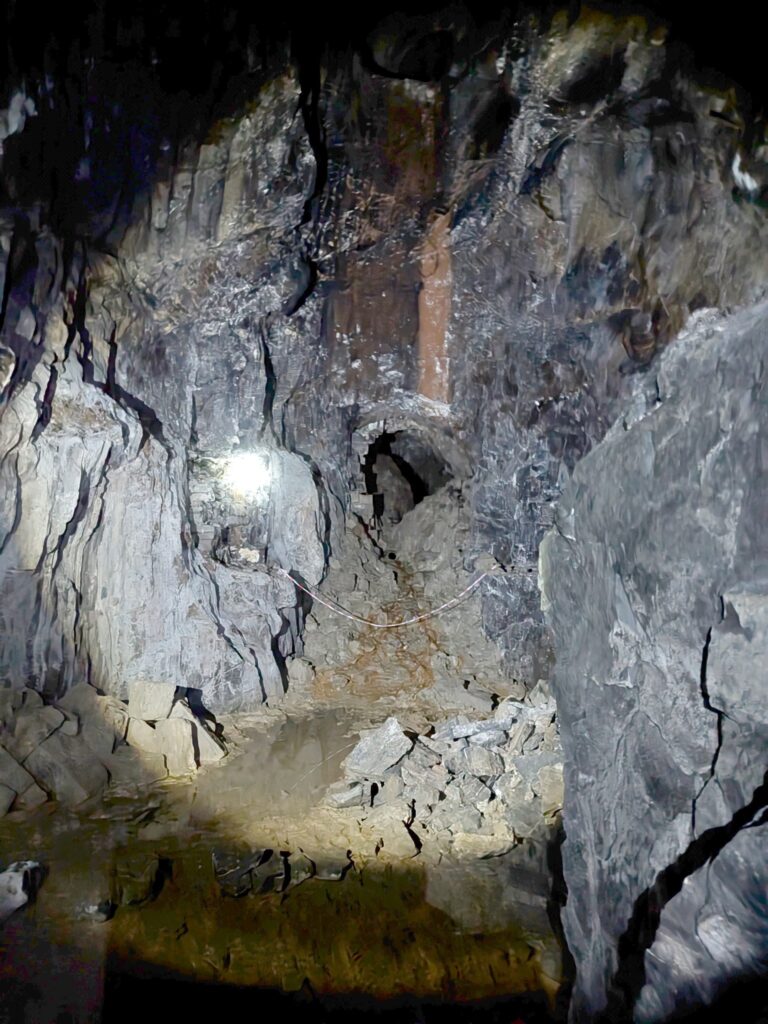
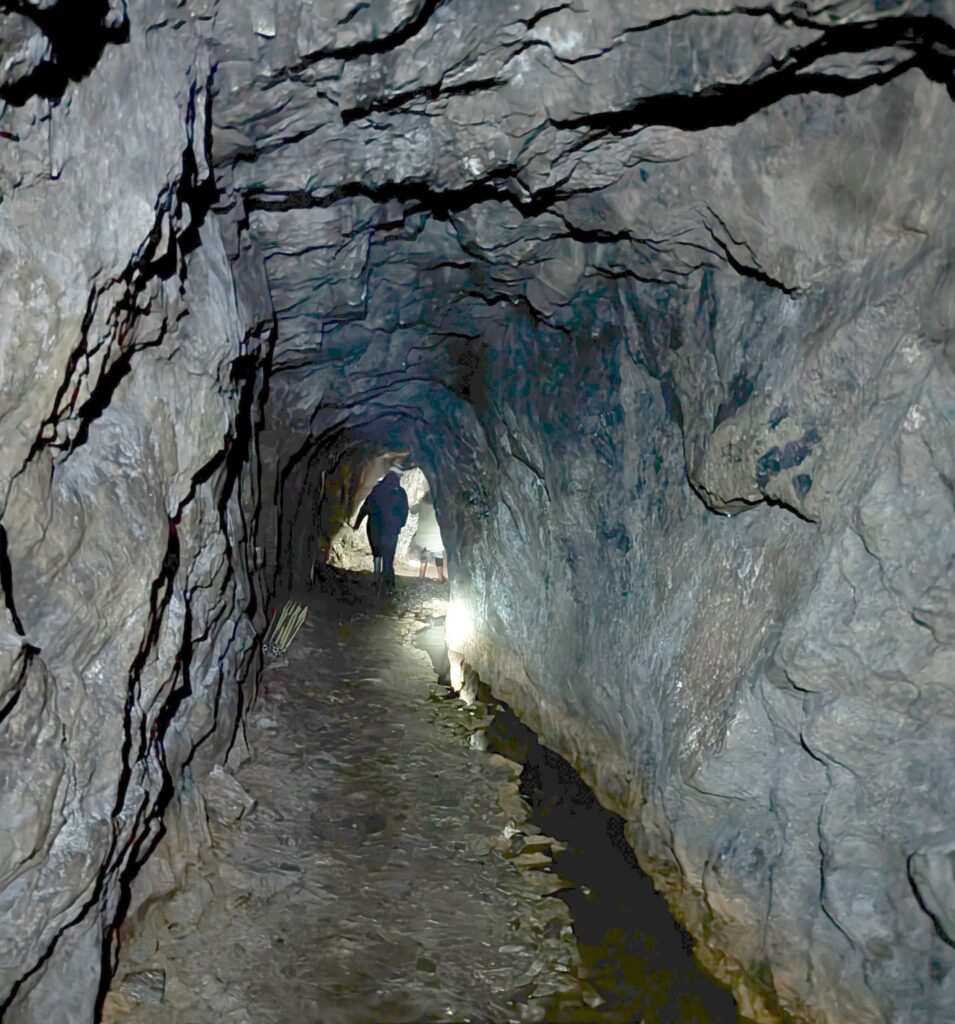
The first impression is not of ruins arranged for visitors, but of a hill whose internal life has only partly withdrawn from view, leaving doors, disturbed ground, spoil heaps and mineral traces as signs of a system that once ran beneath the feet with astonishing depth and ambition. Ecton Copper Mines became one of the most remarkable mining landscapes in Britain, not simply because ore was taken from the hill, but because the hill itself became a place of experiment, calculation and risk, with shafts, levels, drainage systems and engines all answering the same difficult question: how to reach, raise and profit from the metal held inside the folded limestone and shale.
The geology here is not background, but the reason for the whole human story, because Ecton Hill belongs to a landscape of Lower Carboniferous limestones and shales, with the famous Ecton Anticline and nearby Apes Tor giving the area a scientific importance beyond the visible remains of mining. The strange formations, including calcrete made from old scree cemented by groundwater and thinly bedded limestone formed in deeper water conditions, help explain why miners, geologists and industrialists all came to read this hill closely, and why the place is now protected as both an Ancient Monument and a Site of Special Scientific Interest.
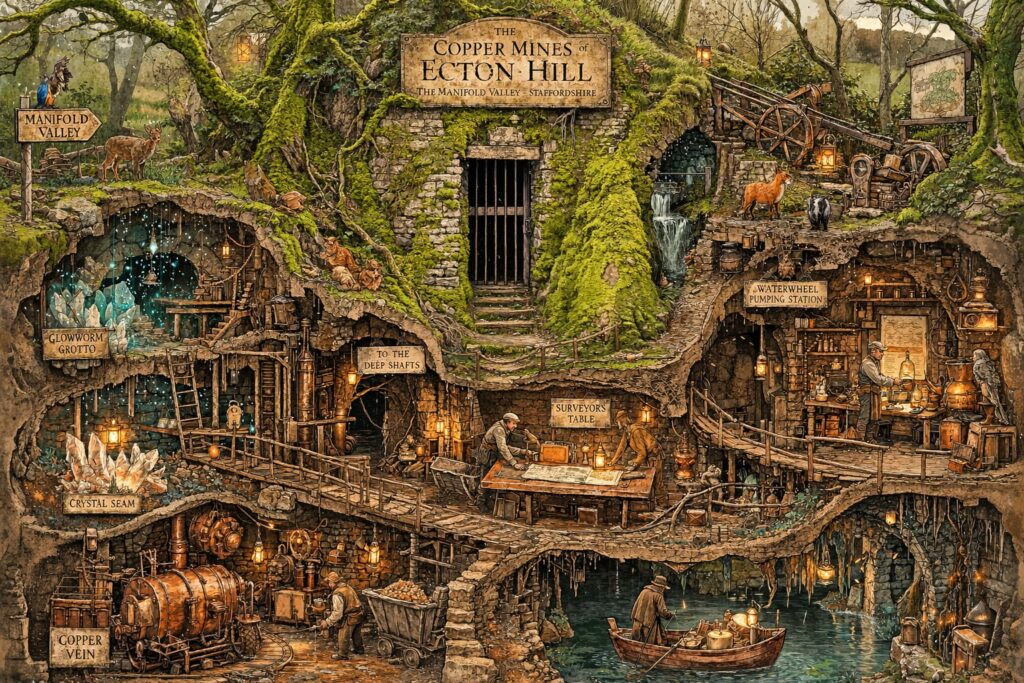
At the height of its fortunes in the late eighteenth century, Ecton Copper Mines stood at the front edge of mining technology, where chemistry, geology and engineering were not separate worlds but practical tools in the struggle to keep a deep mine working. The deepest mine shaft in Britain was sunk here, explosives were reputedly used here in British mining at an early date, an early Boulton and Watt steam engine was installed, and water power was used efficiently for pumping, all of which suggests a place where innovation came not from comfort, but from pressure, depth, danger and the need to solve physical problems quickly.
Water belongs strongly to the story of Ecton, and it is here that the valley offers one of its more tempting pieces of folklore, the suggestion that coracles may once have carried copper ore away down the River Manifold. It is a fine image, almost too fine to abandon, with small hide-covered boats moving through the valley below the mine, but the firmer history points elsewhere, not to coracles carrying heavy ore downstream, but to the use of underground boat levels within the mine itself, where water became an industrial passage and ore could be moved through the workings before being raised to the surface. The legend still has value, not as settled fact but as a clue to the imagination of the place, because it recognises that water was never passive here; it was route, obstacle, power source and engineering problem, while the Manifold itself, disappearing and returning through the limestone country, remains an uncertain river for any neat story of transport.
The money drawn from the hill was considerable enough to pass into the larger architecture of the region, for the Duke of Devonshire is said to have made more than £300,000 profit from the mine in the eighteenth century, a fortune often associated with the building of the Crescent at Buxton. That figure sits oddly in the quietness of the modern hillside, where walkers and visitors encounter grass, stone and the occasional hard edge of industrial remains, yet it helps restore the scale of what happened here, with total ore production estimated at more than 100,000 tonnes, mainly copper ore, and with fortunes made and lost according to what the hill would yield.
Since abandonment, the landscape has not returned to innocence, but has entered a slower phase of occupation, with vegetation settling over spoil heaps, mineral deposits forming underground, and the weather softening edges without erasing the evidence. This kind of ecological recovery does not hide the industrial past so much as interpret it in another language, because plants choose the disturbed ground, water coats the passages, and summer light makes the spoil appear almost ordinary, even while the protected status of the site reminds us that disturbance here must be limited because the ground itself is an archive.
There is still a human scale to the place, and that is important, because without walkers, guides, local roads and the ordinary rhythm of people stopping to look at a hillside, Ecton Copper Mines would risk becoming only a technical subject rather than a lived landscape. The steep rise from the road, the sealed or shadowed openings, the sense of depth behind a door, and the knowledge that the mine once drew together labourers, landowners, engineers, investors and scientists give the visitor enough to stand quietly and understand that this hill was once both workplace and wager.
What remains at Ecton is not a finished story but a set of traces held in stone, grass, water and silence, where the old industrial system has gone but its shape continues to press through the surface. To walk here now is to feel how deeply a landscape can be altered by need, skill and extraction, and how, long after the last ore was raised and the last workings fell quiet, the hill keeps its memory in the angle of the slope, the mineral seam, the underground water, the half-believed river legend and the dark authority of a door leading inward.
Contact
Ecton.
DE6 2AJ
Reasons To Visit
Ecton Copper Mines is a steep limestone landscape where Bronze Age workings, eighteenth-century engineering and geological significance still shape the ground. Today the hill carries its industrial memory through old mine entrances and spoil heaps – tours are available.
Close By - Worth Your Time
Beeston Tor
Best Local Cafe
Best Local Pub
The Manifold Inn
Local Accommodation